Latin America is going through a decisive phase. While many of its democracies face setbacks, recycled authoritarianism, and persistent inequalities, a new generation is emerging that is unwilling to accept silence or apathy as the norm. At this historic crossroads, training and supporting young leaders becomes an urgent and strategic task for those of us who believe in a freer, more just, and democratic continent.
Youth: Powerless Majorities
Youth in Latin America represent more than 30% of the population. However, their representation in political, economic, and social decision-making spaces is extremely limited. In many countries, being young means facing higher unemployment rates, restricted access to quality education, and limited opportunities to influence the direction of their communities. This is no coincidence: current systems are not designed to make way for new voices, but rather to perpetuate structures of exclusion and clientelism.
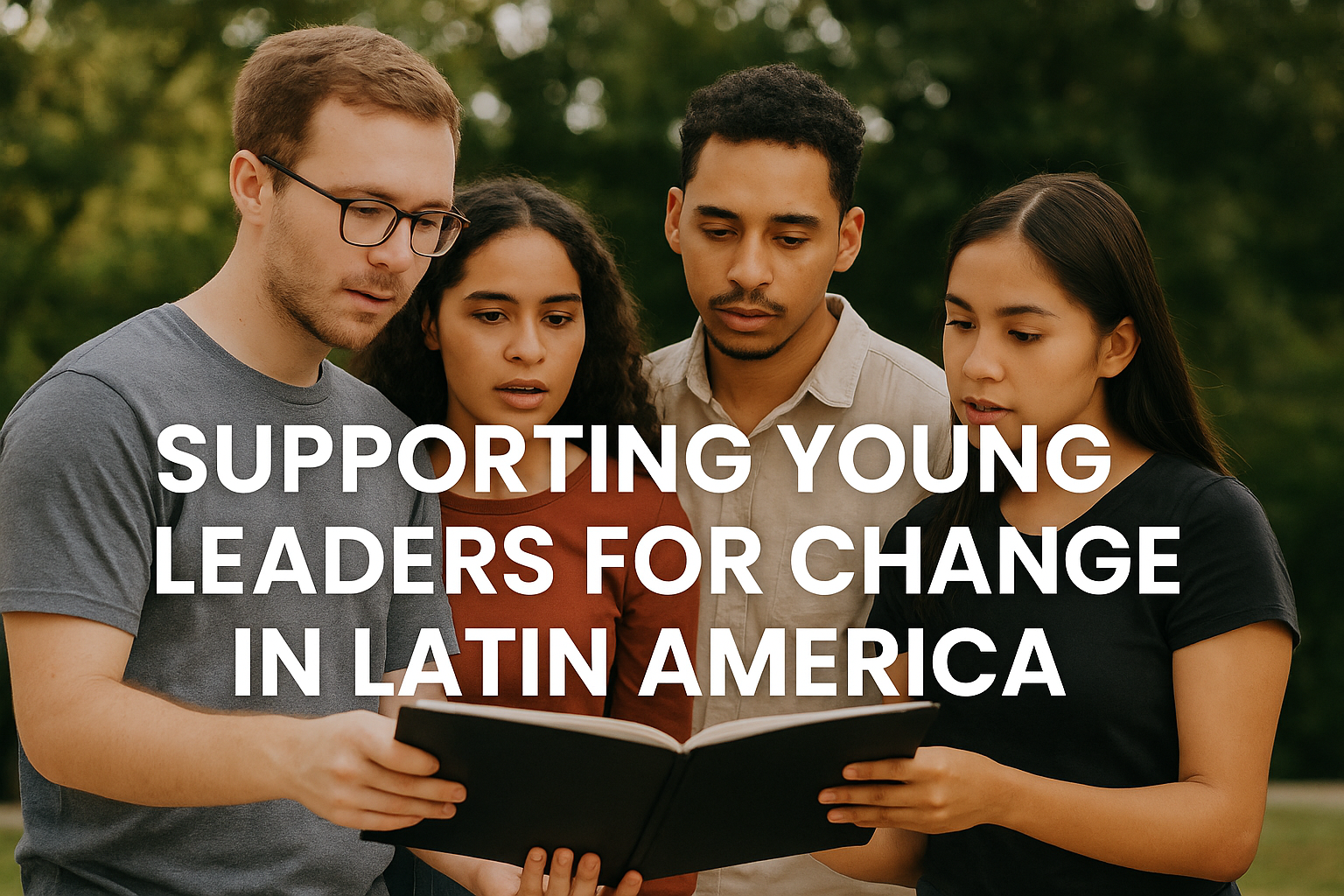
But young people are waking up. From Chile to Nicaragua, from Cuba to Colombia, young people have been at the forefront of mobilizations for social justice, the environment, human rights, and fundamental freedoms. The question is no longer whether they are ready to lead. The real question is: are the rest of us ready to support them and trust their leadership?
Protesting is not enough: we must educate.
Although spontaneous mobilization is powerful, structural transformation requires preparation. That is why it is essential to create spaces where young people can be trained in citizenship, democracy, ethical leadership, and nonviolent action. We need civic academies, mentoring networks, exchange programs, and youth-led political action platforms.
Training young leaders is not indoctrination: it is providing them with tools to think critically, understand their rights, organize their communities, and design solutions to the problems they face. It is sowing the future in historically denied terrain.
Support without co-opting, accompanying without imposing.
Support for young people must be authentic and horizontal. It’s not about imposing agendas or directing their struggles from outside, but rather about supporting their processes with respect, resources, and visibility. This also means ensuring their protection from retaliation, especially in contexts where leadership means confronting authoritarian power, such as in Cuba, Venezuela, or Nicaragua.
Change will come from young people, or it won’t happen at all.
Authoritarianism and apathy are sustained by fear, isolation, and the repeated “nothing will change.” But every young person who organizes, forms a network, and raises their voice breaks that cycle. And when they have training, support, and a community, their impact is multiplied.
That’s why, at organizations like the NewGeneration Foundation, we believe in youth as a transformative force. Not as a future promise, but as agents of change in the present. Latin America can’t wait. And its youth, even less so.
